
Last updated: 18 October 2026
If you are looking for the current tax rules for buy-to-let property, you are in the right place. This guide covers the seven buy-to-let tax rules every UK landlord needs to know for 2026/27, including the higher property income tax rates coming in April 2027:
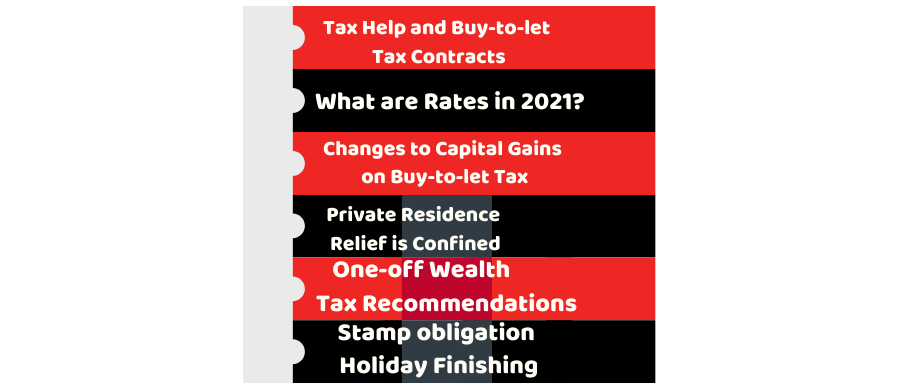
- Tax Relief on Buy-to-Let Mortgage Interest
- Buy-to-Let Income Tax Rates for 2026/27 and 2027/28
- Capital Gains Tax on Buy-to-Let Property
- Private Residence Relief Is Restricted
- Making Tax Digital for Landlords
- Stamp Duty and the Higher Rates for Additional Properties
- Furnished Holiday Lettings and Other Recent Changes

1. Tax Relief on Buy-to-Let Mortgage Interest:
Individual landlords of residential property cannot deduct mortgage interest and other finance costs from their rental income. Instead, they get a basic rate tax credit of 20% of those costs. This restriction, often called Section 24, was phased in between 2017/18 and 2020/21.
The credit is far less valuable for higher and additional rate taxpayers, who pay 40% or 45% on rental profits but only get 20% relief on their interest. From 6 April 2027, the credit will rise to 22% to match the new property basic rate.
To soften the impact, many landlords now buy through a limited company. Companies can still deduct mortgage interest in full, and their profits are taxed at Corporation Tax rates of 19% to 25% rather than personal income tax rates. But taking money out of the company is taxed again as salary or dividends, mortgages often cost more, and moving existing properties into a company can trigger capital gains tax and stamp duty. It is not right for everyone.
2. What are Buy to Let Tax Rates in 2026/27?
For 2026/27, rental profits are taxed at the normal income tax rates in England, Wales and Northern Ireland: 20% basic rate, 40% higher rate and 45% additional rate. The personal allowance is £12,570, and you start paying higher rate tax on income above £50,270.
From 6 April 2027, property income will have its own tax rates: 22% basic, 42% higher and 47% additional rate. Scotland and Wales can set their own property income rates. The £1,000 property allowance and the Rent a Room scheme (£7,500 a year) are unchanged. Watch out for announcements; our experts at Accotax will keep you updated.
3. Changes to Capital Gains on Buy-to-Let Tax:
When you sell a buy-to-let property, any gain is subject to Capital Gains Tax. For 2026/27 the rates on residential property are 18% for gains falling within the basic rate band and 24% above it. The annual exempt amount is only £3,000, down from £12,300 in 2022/23.
You must report the sale of a UK residential property and pay any Capital Gains Tax due within 60 days of completion, using HMRC’s online service. Late reporting brings penalties and interest.
Keep records of your purchase costs, legal fees and capital improvements, because these reduce the taxable gain.
4. Private Residence Relief is Confined:
If a property was once your main home, private residence relief covers the gain for the years you lived there plus the final nine months of ownership. Lettings relief, worth up to £40,000, now only applies if you lived in the property at the same time as your tenants.
5. Making Tax Digital for Landlords:
Making Tax Digital for Income Tax started on 6 April 2026 for landlords and sole traders whose combined property and self-employment income was over £50,000. The threshold falls to £30,000 from April 2027 and £20,000 from April 2028.
If you are within MTD, you must keep digital records, send HMRC quarterly updates using compatible software, and file your tax return by 31 January.
6. Stamp Duty and the Higher Rates:
When you buy an additional residential property in England or Northern Ireland, you pay a 5% surcharge on top of the standard Stamp Duty Land Tax rates. The surcharge rose from 3% to 5% on 31 October 2024.
The standard rates are 0% up to £125,000, 2% from £125,001 to £250,000, 5% from £250,001 to £925,000, 10% from £925,001 to £1.5 million and 12% above that. So a landlord buying a £250,000 buy-to-let pays £15,000 in SDLT. Non-UK residents pay a further 2%.
7. Furnished Holiday Lettings and Other Recent Changes:
The special tax regime for furnished holiday lettings was abolished from 6 April 2025. Holiday lets are now taxed like other residential lettings, so mortgage interest relief is restricted to the tax credit, and capital allowances and business asset disposal relief are generally no longer available for them.
Landlords can still claim replacement domestic items relief for replacing furniture, appliances and furnishings in a let residential property, as well as the cost of repairs, letting agent fees, insurance and other running costs.

Conclusion:
Buy-to-let remains workable, but higher property income tax rates from April 2027, the restricted mortgage interest relief, the 5% stamp duty surcharge and Making Tax Digital mean planning matters more than ever. We hope this guide has helped you understand the buy-to-let tax rules for 2026/27. If you would like advice on your own portfolio, our property accountants can help.
