
In the UK, the four most common types of business structures are sole trader, partnership, private limited company, and Limited Liability Partnership (LLP). Each one changes how you pay tax and the amount of administrative work you have to do every year.
In this article, you’ll get to know about the:
- 4 main types of business structures
- Their pros and cons
- Which type of business is right for you
- And much more…
Let’s get into it!

What Are the Different Types of Business Structures UK?
There are different types of business structures in the UK that operate differently and are classified due to the unique way of structure they own. What makes business structures different is all connected to the details of who owns them and what is the extent of liabilities they are responsible for.
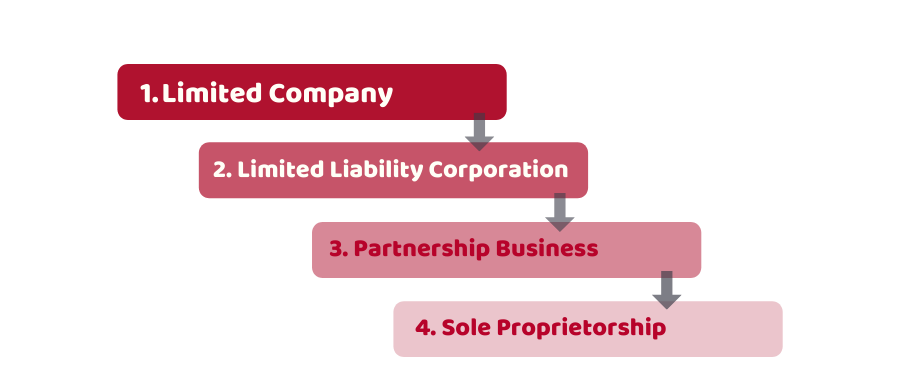
Below is a list for you to find out the most popular, 4 main types of business structures in the UK. Each of them has unique factors in terms of liability for the members, shareholders, and owners.
1) Sole Trader
What is a sole trader?
A sole trader is an individual who owns and operates their own business. It is the simplest of all business types. You run the business as an individual and keep all the profits after tax. However, you are also personally responsible for any losses or debts the business builds up.
How do I register as a sole trader?
You need to register for a Self Assessment with HMRC. You must do this if your gross trading income was more than £1,000 in the tax year. Once registered, you’ll get a Unique Taxpayer Reference (UTR) to file your annual tax returns.
We have discussed the complete process of registering as a sole trader here. This is the quickest way to start a new type of business in the UK.
What are the pros of being a sole trader?
- Easy setup: Very little paperwork to get started.
- Full control: You make every decision without needing partners.
- Privacy: Unlike companies, your accounts are not public.
What are the cons of being a sole trader?
- Unlimited liability: You are personally responsible for all business debts and losses.
- Limited funding: It is often harder to secure bank loans or attract investors.
- Slower growth: Scaling up can be difficult when you are working alone.
How do I know if being a sole trader is right for me?
This structure is perfect if you are a freelancer, a consultant, or a small start-up with low overhead and minimal financial risk. In short, if you want independence and low admin, and your risk is small, this specific type of business may suit you.
2) Partnership
What is a partnership in the UK?
A partnership works much like a sole trader, but with two or more people. You share profits, responsibilities, and decision-making. Each partner pays tax on their share of the profits via their own Self Assessment returns.
How do I register as a partnership?
To register a business partnership in the UK, the nominated partner must register for Self Assessment with HMRC online by 5 October following the end of the tax year in which the partnership started trading. Individual partners must also register separately.
What are the pros of a partnership?
- Shared burden: You have more hands to do the work and more heads for ideas.
- Flexibility: It is easier to set up than a limited company.
- Lower costs: Minimal registration fees compared to incorporating.
What are the cons of a partnership?
- Unlimited liability: Like sole traders, partners are personally liable for business debts.
- Potential for disputes: Differences in opinion between partners can affect the business.
- Shared profits: You’ll need to share the profits with your business partners.
How do I know if a partnership is right for me?
It works well for small teams who trust each other. Partnership is for you if you want to keep things simple without the complexity of a company. Just make sure that both parties are in agreement on the business goals and responsibilities.
3) Limited Company (Ltd)
What is a limited company?
A private limited company is a legal entity that is separate from its owners. That means your personal assets aren’t usually at risk if the business fails. It has its own assets, debts, and tax liabilities.
It is a popular choice among types of business structures because it limits your financial risk. The company is owned by shareholders and managed by directors (who can be the same person).
How do I register as a limited company?
To register a limited company in the UK, you must incorporate your business at Companies House. The process is typically completed online, costs £100, and most companies are registered within 24 hours.
You also need to register with HMRC for Corporation Tax. To start this type of business, you’ll need a unique company name, an address, at least one director, and at least one shareholder.
What are the pros of being a limited company?
- Personal Protection: You aren’t personally responsible for business debts; your private assets (like your home) stay safe.
- Tax Savings: You can pay yourself through a mix of salary and dividends. This may reduce your tax and National Insurance.
- Professional Status: Having “Ltd” after your name adds instant credibility and helps you win larger contracts.
What are the cons of being a limited company?
- More admin: You must file annual accounts and confirmation statements.
- Higher costs: Accountancy fees are usually higher for companies.
- Public data: Your business address and accounts are visible to everyone online.
How do I know if a limited company is right for me?
If you plan to hire staff and take on big contracts, the protection and tax benefits the company provides usually outweigh the extra paperwork. In short, if you want protection from personal liability and plan to grow, this structure is often best.
4) Limited Liability Partnership (LLP)
What is an LLP?
An LLP is a hybrid. It combines the flexibility of a partnership with the limited liability of a company. In an LLP, members are protected from personal liability, similar to the protection offered by a limited company.
And unlike a general partnership, the members of an LLP are not personally liable for the business’s debts.
How do I register as an LLP?
Like a limited company, an LLP must be incorporated at Companies House. You need at least two “designated members” who take on more legal duties to run this type of business correctly.
What are the pros of an LLP?
- Liability protection: Members aren’t personally liable for the firm’s debts.
- Internal flexibility: You can change how profits are split very easily.
- Tax treatment: You are taxed as individuals, not as a corporation.
What are the cons of an LLP?
- Public accounts: You must file financial records at Companies House.
- No Profit Retention: You are taxed on all profits in the year they are earned, whether you withdraw the money or not.
How do I know if an LLP is right for me?
If you want partnership-style flexibility but with some financial protection, an LLP is the best option. This is the standard choice for professional service firms (like lawyers, architects, and accountants) where multiple partners want to work together while protecting their personal wealth.
Comparing Different Business Structures
| Feature | Sole Trader | Limited Company | General Partnership | LLP |
| Legal Status | Same as the owner | Separate entity | Same as partners | Separate entity |
| Liability | Unlimited | Limited | Unlimited (Shared) | Limited |
| Tax Paid | Income Tax | Corporation Tax for Company & Income Tax for Owners | Income Tax | Income Tax & National Insurance |
| Privacy | High (Private) | Low (Public) | High (Private) | Low (Public) |
| Complexity | Very Low | High | Low | High |
Are There Any Other Business Structures in the UK?
While the four main types of business mentioned above cover the majority of UK firms, you may come across these specialised models. These are often chosen for specific social goals or large-scale investment needs.
Some Other business types are:
- Public Limited Company (PLC): This is a limited company that has decided to “go public.” It must have a minimum nominal share capital of £50,000, of which at least 25% must be fully paid up before it can start trading. The big advantage here is the ability to raise significant funds by selling shares to the general public on the London Stock Exchange.
- Community Interest Company (CIC): A CIC is a type of limited company designed for social enterprises. Its primary aim is to benefit the community rather than maximise profits for shareholders. It features an “asset lock” to ensure funds stay within the social cause.
- Social Enterprise: These are types of businesses that trade for a social or environmental purpose. While they still aim to make a profit, they reinvest that money back into their mission rather than paying it out to owners. A common legal form for this is a Community Interest Company (CIC).
- Franchise: A franchise is a business model where a franchisee buys the right to operate a business using the brand, business model, and systems of an established franchisor. This is ideal for entrepreneurs who want to run a business with an already established brand and proven success, but without having to build everything from the ground up.
- Co-operative (Co-op): A co-op is owned and run by its members, who can be employees, customers, or residents. Decisions are made democratically, typically on a ‘one member, one vote’ basis. And profits are shared based on how much a member uses the business, rather than how much they invested.
- Trusts: A trust is a structure where “trustees” manage assets for the benefit of others. These types of business are often used for family businesses or asset protection. They are complex to set up, but can be very effective for long-term tax planning and succession.
What Type of Business Structure Should I Choose?
The right choice depends on your long-term goals and how much personal risk you are willing to take. If you are starting alone with low costs and minimal risk, becoming a sole trader is the fastest and cheapest option. It keeps your paperwork simple while you test your ideas.
However, if you plan to hire staff, hold expensive stock, or take out business loans, a limited company is usually safer because it protects your personal assets. For professionals working in pairs or groups, an LLP offers a great balance of partnership flexibility and legal protection.
In short, each type of business has pros and cons, so think about your future plans and risk tolerance before deciding.
What Is the Difference Between a Business and a Company?
The term business is broad. It simply means any activity where goods or services are sold for profit. A company, on the other hand, is a specific legal structure used for running a business.
For example, a person working as a sole trader or in a partnership still runs a business, but they do not operate through a separate legal entity. A limited company is its own legal body. This makes it separate from the people who own or manage it.
In short, all companies are businesses, but not all businesses are companies. Your choice between these types of business depends on how much formality and protection you need for your work.
What Is the Most Popular Business Type in the UK?
The sole trader is by far the most popular. It accounts for over 50% of the private sector because it is so easy to start. However, many people switch to a limited company as they grow.
Nevertheless, when looking at the most common types of business in the UK, the simplicity of being a sole trader usually wins for those just starting out.
Can I Change My Business Structure Later?
Yes, you can change your business structure later. It involves a bit of paperwork to close the old status and open the new one, but it is a very common move for growing businesses.
Many entrepreneurs start with simpler types of business and move to more complex structures, like a limited company, as their turnover increases.
Do I Need a Business Bank Account?
The answer depends on your business structure. If you’ve set up a limited company or LLP, having a dedicated business bank account is absolutely essential. Why? Because legally, the money flowing through your business belongs to the company itself, not to you personally.
For sole traders and partnerships, the rules are more flexible. You won’t face any legal penalties for mixing personal and business finances. However, it is highly recommended to keep your personal and work spending separate.
Do I Need an Accountant for a Limited Company?
While not a legal requirement, having an accountant is highly recommended. The tax rules and filing deadlines for companies are strict. From April 2026, a new points-based penalty system for Income Tax and doubled fixed penalties for Corporation Tax make filing accuracy more important than ever.
Professional advice ensures you are using the most tax-efficient type of business structure for your specific situation.
The Bottom Line
Choosing the right type of business is one of the most important steps when starting. Sole traders offer simplicity, partnerships bring shared responsibility, limited companies provide protection and credibility, while LLPs balance flexibility with limited liability.
Other structures like CICs (a type of limited company for social enterprises) or CIOs (for charities) suit social or charitable aims. Before you make your choice, really think about what you want to achieve, how much risk you’re comfortable with, and where you see your business heading. The right choice now saves you stress later and sets your business up for success.
If you’re still unsure, seek professional advice to ensure you’re making the best choice for your business.

How AccoTax Can Help
If you need help with any accounting service, At Accotax, our experienced small business accountants provide advice to help sole traders, partnerships, and limited companies select the most suitable structure for their circumstances. We offer a range of packages designed to fit your unique needs!
Reach out, get an instant quote and let us help you stay compliant!
Disclaimer: All the information provided in this article on types of businesses, including all the texts and graphics, is general in nature. It does not intend to disregard any of the professional advice.
